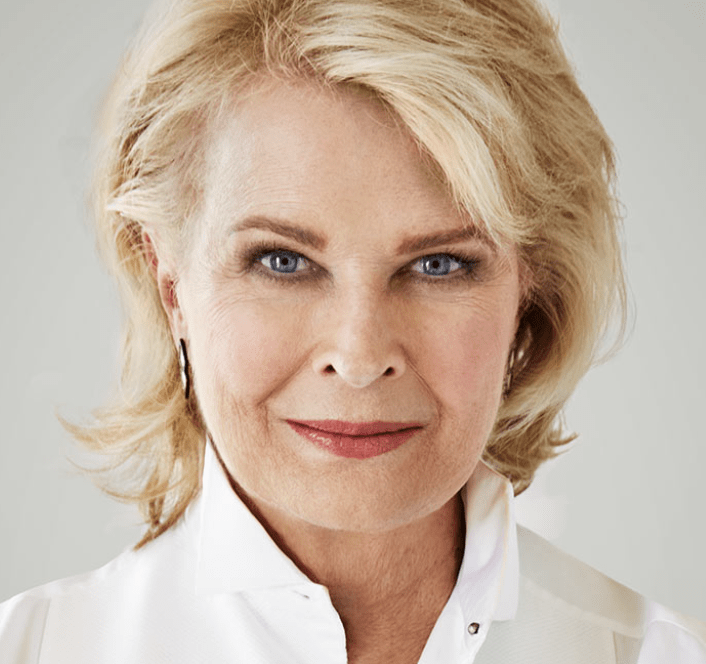
Candice Bergen (birthname: Candice Patricia Bergen), while best known for her television performances in such long-running series as
Murphy Brown (1988-1998) and
Boston Legal (2005-2008), has a distinguished cinema career, having worked with such directors as Richard Attenborough, Bruno Barreto,
Noah Baumbach, Warren Beatty,
James L. Brooks, Richard Brooks, Michael Cacoyannis, George Cukor, John Korty, Stanley Kramer, Claude Lelouch, Sidney Lumet, John Milius, Mike Nichols, Herbert Ross, Richard Rush, Steven Soderbergh, Lina Wertmüller, and Robert Wise.
Although her famous last name (associated with her famed ventriloquist father Edgar) may have been either a boost or a crutch, Bergen quickly made her own name in the movies during the heady mid-1960s, starting with a starring role in director Sidney Lumet’s version of Mary McCarthy’s
The Group (1966), with Joan Hackett, Elizabeth Hartman, Shirley Knight, Jessica Walter, Larry Hagman, and Hal Holbrook.
Candice Bergen delivered an impressive performance opposite Steve McQueen in one of director Robert Wise’s greatest movies—and one of the great Hollywood movies of the mid-60s—
The Sand Pebbles (1966), co-starring Attenborough (winning the Globe for best supporting actor), Richard Crenna, and Mako, becoming the fourth-highest-grossing movie of the year and scoring eight Oscar nominations including best picture and McQueen’s only acting Oscar nomination.
Bergen made the first of several European-based productions with Greek filmmaker Michael Cacoyannis for
The Day The Fish Came Out 1967), with Tom Courtenay, Colin Blakely, and Sam Wanamaker, followed by Bergen co-starring with Yves Montand and Annie Girardot in Claude Lelouch’s hit romantic drama,
Vivre pour vivre (1967), nominated for the best foreign-language Oscar.
Bergen joined co-stars Michael Caine, Anthony Quinn, and Anna Karina in writer John Fowles’ version of his 1965 novel,
The Magus (1968), directed by Guy Green and receiving withering critical condemnation. Another international production (via Paramount) for co-star Bergen was the Harold Robbins adaptation,
The Adventurers (1970), with Charles Aznavour, Ernest Borgnine, Rosanno Brazzi, and Olivia de Havilland.
Candice Bergen made a big impression opposite Elliot Gould in producer-director Richard Rush’s successful counterculture comedy,
Getting Straight (1970), and then Bergen jumped into the Hollywood trend of the revisionist Western (correcting the long-false depiction of heroic U.S. cavalry and “bad-guy Indians”) as a co-star in director Ralph Nelson’s then-ultra-violent and controversial
Soldier Blue (1970), with Peter Strauss, Donald Pleasance, and John Anderson.
Bergen delivered one of her most interesting early performances in the Mike Nichols/Jules Feiffer relationship drama,
Carnal Knowledge (1971), co-starring Jack Nicholson, Art Garfunkel, Ann-Margret (Oscar-nominated for supporting actress), Carol Kane, and Rita Moreno, which faced multiple obscenity cases in courts from Georgia to Italy.
Bergen joined another distinguished list of actors (Oliver Reed, Gene Hackman, L.Q. Jones, and Mitchell Ryan) for the widely denounced U.S.-U.K.-produced Western,
The Hunting Party (1971), and then Bergen starred in the critically-dismissed drama from
Paramount,
T.R. Baskin (1971), directed by Herbert Ross and with Peter Boyle, James Caan, and Marcia Rodd. Another critical failure for a movie starring Candice Bergen was the U.K.-made heist comedy,
11 Harrowhouse (1974), with Charles Grodin as lead and screenwriter, and James Mason, Trevor Howard, and Sir John Gielgud.
One of Bergen’s best movies in this period was the wildly entertaining adventure movie,
The Wind and the Lion (1975), in which she played opposite Sean Connery, Brian Keith, and John Huston under screenwriter John Milius’ direction, which combined a retro political attitude with rich cinematic references. Bergen reunited with Hackman for another Western, writer/director/producer Richard Brooks’ epic,
Bite the Bullet (1975) about a 700-mile 1906 horse race featuring James Coburn, Ian Bannen, Jan-Michael Vincent, and Ben Johnson.
Candice Bergen went into the de-glamorized mode for her co-starring role opposite Hackman (in their third movie together in seven years) in producer-director Stanley Kramer’s universally panned paranoid thriller,
The Domino Principle (1977), with Mickey Rooney, Edward Albert, Eli Wallach, and Richard Widmark. Bergen returned to European cinema as co-star with popular Italian star Giancarlo Giannini in Lina Wertmüller’s
The End of the World in our Usual Bed on a Night Full of Rain (1978), the filmmaker’s first movie with English dialogue, and then Bergen co-starred with Ryan O’Neal in
Oliver’s Story (1978), the commercially failed sequel to the mega-hit,
Love Story (1970), directed by John Korty and with Nicola Pagett, and Ray Milland.
Candice Bergen was nominated for her only Oscar (supporting actress) for her role opposite Burt Reynolds and Jill Clayburgh (also Oscar-nominated) in the hit comedy,
Starting Over (1979), from Alan J. Pakula (who directed and co-produced) and James L. Brooks (who wrote and co-produced) and with Charles Durning, Frances Sternhagen, Austin Pendleton, and Mary Kay Place.
Bergen then joined legendary Hollywood director George Cukor for his final film,
Rich and Famous (1981), co-starring Jacqueline Bisset, but failing with critics and audiences. Bergen returned to a familiar register as a co-star in an epic movie, in this case with Ben Kingsley in producer-director Richard Attenborough’s acclaimed biopic,
Gandhi (1982), with Edward Fox, Sir John Gielgud, Trevor Howard, John Mills, and Martin Sheen, and winning eight (including picture, director and actor) of its eleven Oscar nominations, and grossing a potent $128 million worldwide.
In her first sci-fi turn, Bergen was the voice of the female counterpart of the HAL 9000 computer in producer/writer/director Peter Hyams’
2010: The Year We Make Contact (1984), a relatively conventional sequel to Stanley Kubrick’s classic,
2001: A Space Odyssey (1968), which brought back Keir Dullea and Douglas Rain for return appearances.
In her final feature for the next fifteen years (after a dazzling nineteen-year run), Bergen co-starred with Burt Reynolds, George Segal, and Charles Durning in the widely dismissed (especially by its creator, novelist-screenwriter Elmore Leonard) crime comedy,
Stick (1985), which tanked with critics and at the box office.
After a long break from the movies (while enjoying great acclaim and popularity on television), Candice Bergen returned for a kind of second phase to her movie career as generally a supporting player—albeit in mostly negligible features (though some that were huge box office hits, like 2000’s
Miss Congeniality, 2002’s
Sweet Home Alabama, 2008’s
Sex and the City (with Bergen reviving her role from the TV show), and 2009’s
Bride Wars).
A few notable exceptions include
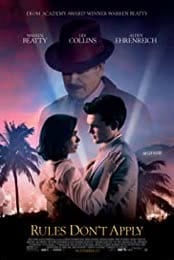
Rules Don’t Apply (2016), marking the filmmaking and star return of Warren Beatty, but which bombed at the box office; Noah Baumbach’s acclaimed
The Meyerowitz Stories (New and Selected), with Bergen in a supporting role opposite Adam Sandler, Ben Stiller, Dustin Hoffman, Emma Thompson,
Adam Driver, Sigourney Weaver, and Judd Hirsch; and Bergen acting under Steven Soderbergh’s direction in the comedy-drama,
Let Them All Talk (2020), written by Deborah Eisenberg and co-starring Meryl Streep, Gemma Chan, Lucas Hedges, and Dianne Wiest.
Candice Bergen enjoyed her first co-starring role in a franchise with the hit comedy,
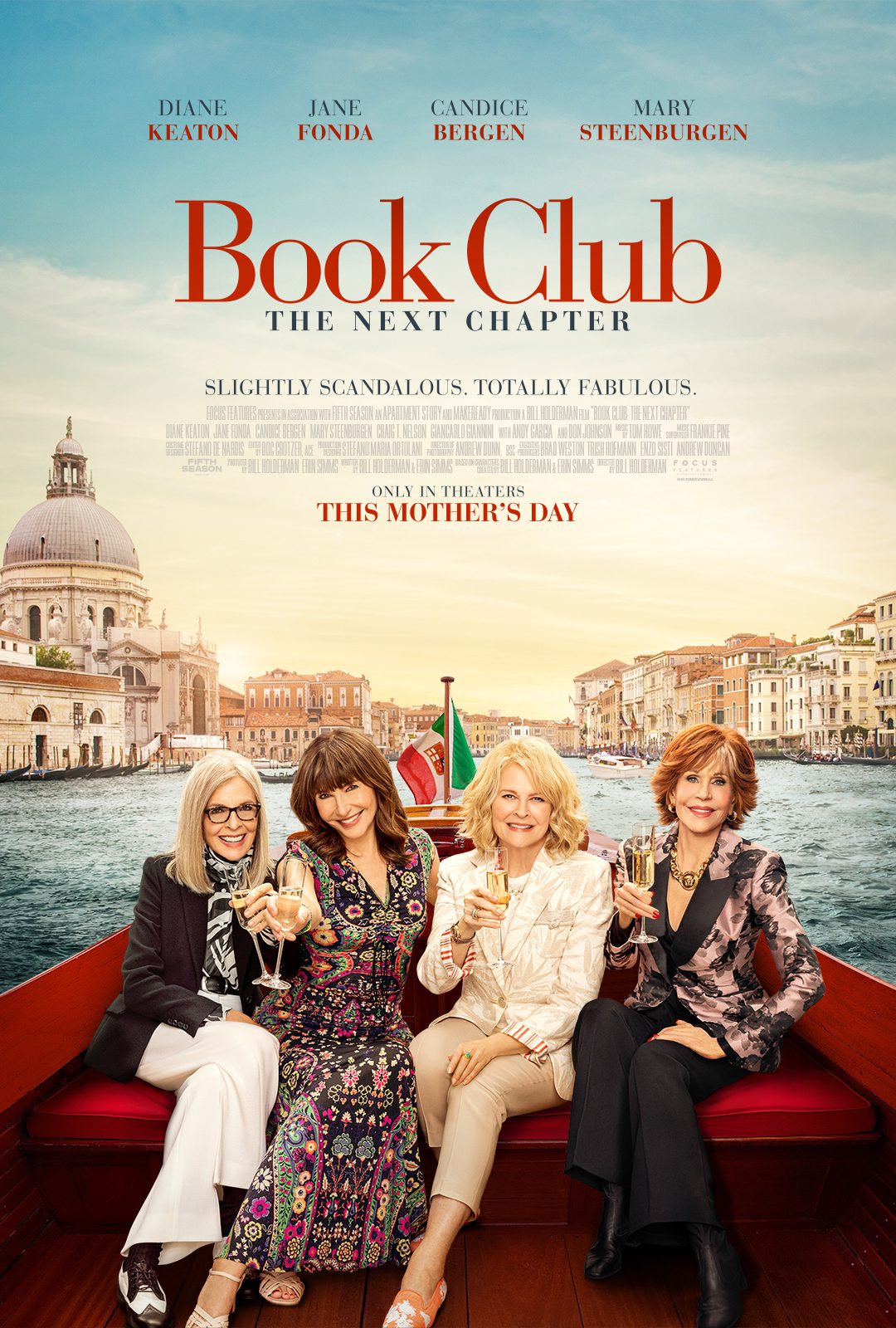
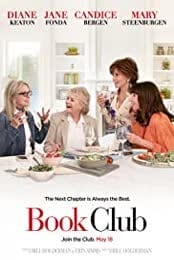
Book Club (2018), co-starring Diane Keaton, Jane Fonda, and
Mary Steenburgen, and grossing $104.4 million globally on a $14 million budget, leading to the sequel,
Book Club: The Next Chapter (2023), reuniting the four stars with new cast member, Bergen’s old former castmate, Giancarlo Giannini. Bergen then starred opposite Paul Bettany in Bettany’s co-written comedy-drama for Miramax,
Harvest Moon (date to be announced), directed by Mark Waters and with Bethany Joy Lenz, Carmen Ejogo, Nico Tirozzi, and Dane West.