
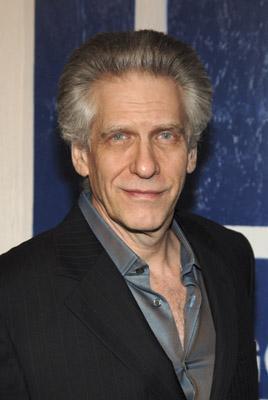
David Cronenberg
Birthdate: March 15, 1943 (83 Years Old)
Birthplace: Toronto, Ontario, Canada
The master of the body horror film and one of Canada’s most important film artists, David Cronenberg (birth name: David Paul Cronenberg) is responsible for setting a fresh standard for the horror genre (and beyond) that delves deep into the biological as well as the psychological aspects of the disease, infection, and human violence.
Cronenberg is one of the few Anglo-Saxon filmmakers who can be said to be a genuine surrealist and has consistently held to the same obsessions from his earliest no-budget films to his latest, Crimes of the Future (2022), with Viggo Mortensen, Kristen Stewart, and Lea Seydoux, competing in the 2022 Cannes Film Festival.
A self-taught filmmaker, David Cronenberg began making shorts and then two no-budget features before his proper debut in 1975 with Shivers, followed by the acclaimed cult hit, Rabid (1977), which established Cronenberg’s reputation. Although he detoured momentarily with the racing-car action movie, Fast Company (1979), it was with the chilling The Brood (1979), with Oliver Reed and Samantha Eggar, and the highly disturbing body horror classic, Scanners (1981), with Patrick McGoohan, which solidified Cronenberg’s international reputation beyond North America.
Until this point, David Cronenberg operated as an independent Canadian filmmaker, but with Videodrome (1983), he began to work with American funding and actors (in this case, James Woods and Debbie Harry) and followed up with a fine Stephen King adaptation, The Dead Zone (1983) with Christopher Walken. With bigger budgets and greater resources, Cronenberg was able to stage more spectacular variations on his body horror theme with his box-office hit, The Fly (1986), with Jeff Goldblum and Geena Davis, and the doppelganger psychological thriller, Dead Ringers (1988), with Jeremy Irons.
Cronenberg took more time between productions from this point on, expanding his repertoire to such ambitious projects as an inventive adaptation of William S. Burroughs’ Naked Lunch (1991), with Peter Weller and Judy Davis, an elegant screen version of David Henry Hwang’s play, M. Butterfly (1993), with Irons and John Lone, and the award-winning hit, Crash (1996), a brilliant, divisive and violent adaptation of J.G. Ballard’s novel with James Spader, Holly Hunter, and Deborah Kara Unger.
Crash sparked one of the biggest controversies in the history of the Cannes Film Festival, with mixes of loud cheers and boos, and bitterly dividing the jury, resulting in a Special Jury Prize (against the festival’s jury rules) strongly opposed by the jury president Francis Ford Coppola. It received an NC-17 rating in the U.S. and temporary bans in other countries, including the U.K.
David Cronenberg explored the then-emerging digital world in Existenz (1999), with Jennifer Jason Leigh, Jude Law, and Willem Dafoe, which premiered at the Berlin Film Festival, where it won a Silver Bear. Cronenberg delved into pure psychological thriller territory with Spider (2002), with Ralph Fiennes, Miranda Richardson, and Gabriel Byrne, and even deeper into crime noir fiction with his non-horror masterwork, A History of Violence (2005), with Viggo Mortensen, Maria Bello, William Hurt, and Ed Harris.
Cronenberg’s interest in crime fiction, and his collaboration with Mortensen, continued with his fine gangland drama, Eastern Promises (2007), with Naomi Watts and Vincent Cassel, and then again with Mortensen in the Jung vs. Freud drama, A Dangerous Method (2011), with Michael Fassbender and Keira Knightley, his third production produced with Jeremy Thomas.
David Cronenberg has made only three features in the past decade, each in completely different registers and genres. Perhaps the most unusual entry in Cronenberg's filmography, his adaptation of Don DeLillo’s compact novel, Cosmopolis (2012), cast Robert Pattinson as a man in the rear seat of a limo driving through the New York streets.
For the first time, Cronenberg filmed in the U.S. for his next film starring Pattinson, an uncharacteristic satire with a Hollywood background, Maps to the Stars (2014), with Julianne Moore (who won Best Actress at the Cannes Film Festival), Mia Wasikowska and John Cusack. Cronenberg received an Honorary Golden Lion from the Venice Film Festival in 2018. After his longest gap between features, Cronenberg returned to the Cannes red carpet and the body horror genre with Crimes of the Future, which is not a remake of his second no-budget feature, also titled Crimes of the Future (1970).
Personal life
Toronto-born David Cronenberg was raised by musician mother Esther and writer-editor father Milton Cronenberg. His sister is costume designer Denise Cronenberg. After attending college prep schools Harbord Collegiate Institute and North Toronto Collegiate Institute, he studied science and English at the University of Toronto and founded the Toronto Film Co-op with future writer-producer-director Ivan Reitman.
Cronenberg graduated at the top of his class in 1967 from the University of Toronto. He was married to Margaret Hindson in 1972 and divorced her in 1979. They had one daughter, Cassandra. Cronenberg then married Carolyn Zeifman in 1979, until her death in 2017. They had two children, Brandon (now a film director), and Caitlin.
David Cronenberg Movies
Director
Collapse
Previous (1)
- 2022 |
Crimes of the Future
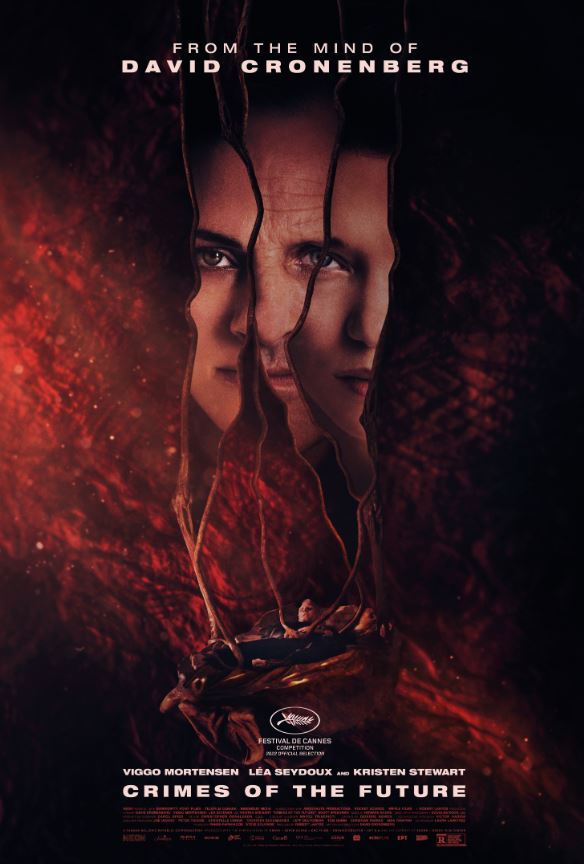
Humans adapt to a synthetic environment, with new transformations and mutations. With his partner Caprice, Saul Tenser, celebrity performance artist, publicly showcases the metamorphosis of his organs in avant-garde performances.
Actor
Collapse
Previous (4)
- 2024 |
- 2020 |
Disappearance at Clifton Hill
asWalter
Follows a troubled young woman returning to her hometown of Niagara Falls, where the memory of a long-ago kidnapping quickly ensnares her.
- -- | as Chester Danforth
- -- | as Dr. Philip K. Decker
Facts About David Cronenberg
Getting Personal: David Cronenberg’s The Brood, which he has referred to as his own twisted version of Kramer vs. Kramer (1979), is inspired in part by the emotions of his bitter divorce, dramatizing the murder of a character resembling his first wife, Margaret.
Last of its Kind: David Cronenberg’s A History of Violence is the last Hollywood-produced movie to be released in the VHS format.
Point of View: Cronenberg has commented in interviews that for his body horror movies, he tries to view the action from the point of the disease or virus.
Actor: David Cronenberg has acted in 38 features, TV series, shorts, and videos, including The Death of David Cronenberg (2021), in which he played himself, and as Kovich in seven episodes of Star Trek: Discovery (2021).