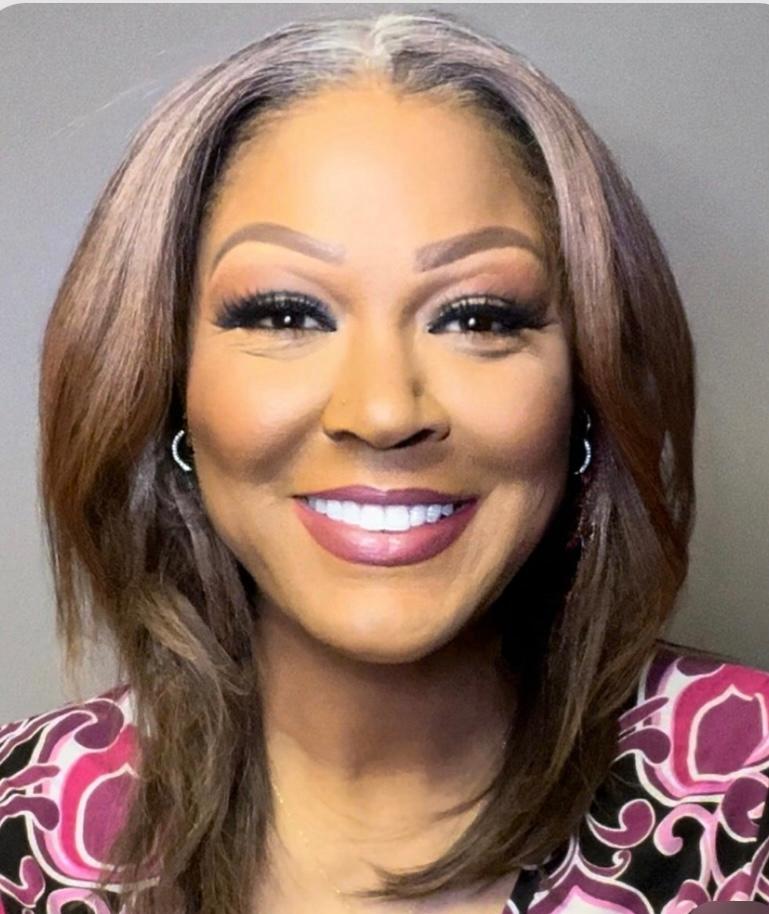
Julia Roberts (birthname: Julia Fiona Roberts) has been one of the most beloved movie stars for more than a generation, initially gaining her fame on the power of her charisma and winning smile, but later maturing into an actor capable of ranging widely between comedy and drama.
After seven years of fame, Roberts established her acting credentials by winning the Best Actress Oscar in 2001 for
Erin Brockovich (2000) and shifted more and more towards serious and/or stylish movies, such as
Closer (2004), directed by Mike Nichols.
Roberts burst on the scene with an impressive turn in
Mystic Pizza (1988), opposite Annabeth Gish, Lili Taylor, Vincent D’Onofrio, and Matt Damon, which earned her a Female Lead nomination from the Independent Spirit Awards. Roberts’ major breakthrough to a wider audience was with her pivotal and dramatic role in
Steel Magnolias (1989), directed by Herbert Ross and co-starring Sally Field, Dolly Parton, Shirley MacLaine, Daryl Hannah, and Olympia Dukakis.
But it was the Garry Marshall-directed rom-com,
Pretty Woman (1990), with Richard Gere, that established Julia Roberts as a huge movie star and scored her first Oscar nomination for Best Actress. Roberts displayed her range in the psychological horror film,
Flatliners (1990), with Kiefer Sutherland, Kevin Bacon, William Baldwin, and Oliver Platt.
Roberts proved her box-office clout with the thriller,
Sleeping with the Enemy (1991) since even though critics dismissed it, the movie broke the record for the biggest domestic box-office opening for a movie with a female lead (grossing $175 million worldwide). This pattern—critical pans, box-office hit—persisted through much of Roberts’ career, including
Dying Young (1991), with Campbell Scott.
Julia Roberts’ collaboration with
Steven Spielberg—along with Dustin Hoffman and Robin Williams—would appear to have been money in the bank, but
Hook (1991) proved to be a modest failure for all concerned with an underwhelming box-office return ($300 million for the expensive production). Again, mixed reviews and a powerful box office ($200 million worldwide) characterized Roberts’ next,
The Pelican Brief (1993), co-starring Denzel Washington.
Roberts joined filmmaker Robert Altman again (after a cameo in Altman’s 1992
The Player) in his Paris fashion movie,
Prêt-à-Porter (1994), with an international cast of Anouk Aimee, Marcello Mastroianni, Sophia Loren, Kim Basinger, Lauren Bacall, Tim Robbins,
Forest Whitaker, and Jean Rochefort.
Despite her excellent box-office record, Julia Roberts has experienced a few bombs, such as the Stephen Frears-directed
Mary Reilly (1996), with John Malkovich and Glenn Close. Roberts played supporting to lead Liam Neeson in Neil Jordan’s historical Irish drama,
Michael Collins (1996), which won the Golden Lion and Best Director at the Venice Film Festival. Roberts continued her supporting work in Woody Allens’s rom-com,
Everyone Says I Love You (1996), with Alan Alda, Allen, Drew Barrymore, and Natalie Portman.
One of Roberts’ few universally acclaimed global hits was
My Best Friend’s Wedding, directed by P.J. Hogan and co-starring Dermot Mulroney, Cameron Diaz, and Rupert Everett. Roberts jumped into the action-movie genre with director Richard Donner’s twisty
Conspiracy Theory (1997), with Mel Gibson and
Patrick Stewart, earning nearly $137 million globally. Another hit for Roberts (and for the first time serving as executive producer) came next with director Chris Columbus’ comedy-drama,
Stepmom (1998), with Susan Sarandon and Ed Harris.
Julia Roberts hit her commercial zenith with the British rom-com directed by Roger Michell and written by Richard Curtis,
Notting Hill (1999), with Hugh Grant, Hugh Bonneville, and Rhys Ifans, and universally acclaimed by critics and grossed $364 million worldwide—making it the highest-grossing British movie of all time. Roberts hit box-office gold (and plenty of critical pans) for the second time with co-star Richard Gere and director Garry Marshall with
Runaway Bride (1999), earning $309 million worldwide.
But it was Oscar gold that Julia Roberts won (for Best Actress) with her next movie, the acclaimed Steven Soderbergh true-life drama,
Erin Brockovich (2000), with Albert Finney, Aaron Eckhart, and Peter Coyote. Although it perversely separated Julia Roberts and
Brad Pitt for most of the movie, the crime comedy
The Mexican (2001) earned nearly $148 million globally, with a standout performance by James Gandolfini. Fitting the usual pattern of a Roberts movie (bad reviews, great box office), the Joe Roth-directed
America’s Sweethearts (2001) co-starred Billy Crystal, Catherine Zeta-Jones, John Cusack, Stanley Tucci, and Christopher Walken.
Roberts reunited with Soderbergh as one of the few women in
Ocean’s Eleven (2001), starring
George Clooney,
Matt Damon, Andy Garcia, and Brad Pitt, and the first in the
Ocean’s Trilogy. Roberts was also a part of the ensemble of Soderbergh’s next movie, the universally panned (and box-office bomb)
Full Frontal (2002), but rebounded brilliantly in Clooney’s superb directorial debut,
Confessions of a Dangerous Mind (2002), starring Sam Rockwell (who won Best Actor at the
Berlin Film Festival) and Drew Barrymore.
Director Mike Newell’s drama,
Mona Lisa Smile (2003) is now perhaps best remembered as the movie that earned Julia Roberts the biggest salary pay ever given to a female actor--$25 million. Staking a claim as a serious dramatic actor, Julia Roberts held her own opposite
Jude Law, Natalie Portman, and Clive Owen in Patrick Marber’s drama directed by Mike Nichols,
Closer (2004), earning $115 million worldwide and two Oscar nominations (for Owen and Portman) and win (including for Roberts) from the National Board of Review.
After returning as part of the gang in
Ocean’s Twelve (2004) and doing voice work in the animated movies
The Ant Bully (2006) and
Charlotte’s Web (2006), Roberts reunited with director Nichols for his final movie:
Charlie Wilson’s War (2007), with
Tom Hanks, the Oscar-nominated Philip Seymour Hoffman, and Amy Adams. Writer-director Tony Gilroy paired Roberts and Clive Owen for the sneakily-plotted
Duplicity (2009), followed by
Valentine’s Day (2010), an ensemble rom-com marking Roberts’ third project with director Garry Marshall, with Jessica Alba, Kathy Bates, Jessica Biel, and Bradley Cooper.
Julie Roberts enjoyed another three-figure million-dollar hit with writer-director Ryan Murphy’s adaptation of Elizabeth Gilbert’s best-seller,
Eat Pray Love (2010). Perhaps Roberts’ most surprising box-office failure was
Larry Crowne (2011), which paired Roberts with Tom Hanks, who wrote, directed, and starred: The estimated worldwide gross was somewhere between $60-$70 million worldwide, a remarkably low number given the co-stars.
Roberts joined Lily Collins in the Snow White-themed
Mirror Mirror (2012), directed by Tarsem Singh, earning $183 million worldwide. Roberts entered the Oscar race once again (along with co-star Meryl Streep) for the Tracy Letts drama (Letts adapting his play),
August: Osage County (2013), co-starring Ewan McGregor, Chris Cooper, Benedict Cumberbatch, and Sam Shepard. One of Roberts’ lower-grossing films ($32 million globally) of this period was the Hollywood remake (by writer-director Billy Ray) of Juan Jose Campanella’s Argentine political drama,
Secret in Their Eyes (2015), with Chiwetel Ejiofor and Nicole Kidman.
Julia Roberts reunited for a final time with her
Pretty Woman director, Garry Marshall, for the romantic drama,
Mother’s Day (2016), with Jennifer Aniston, Kate Hudson, and Jason Sudeikis, but while it earned a respectable $48 million worldwide, it was one of the worst reviewed films of Roberts’ career, scoring 18 on Metacritic.com. Roberts shifted into high suspense mode with one of her favorite co-stars, George Clooney, for the Jodie Foster-director thriller,
Money Monster (2016).
After doing vocal work on the $197 million-grossing animated
Smurfs: The Lost Village (2017), Julia Roberts enjoyed a major hit with the family movie,
Wonder (2017), co-written and directed by Stephen Chbosky, co-starring Owen Wilson, Jacob Tremblay, Mandy Patinkin, and Daveed Diggs. Despite a Toronto Film Festival premiere, excellent reviews, and the brilliant young actor and co-star Lucas Hedges, Roberts’ star power wasn’t enough to lift writer-director Peter Hedges’ solid drama,
Ben Is Back (2018) to box-office success, grossing only $12 million.
Roberts once again paired with Clooney (and also as producer) for the light rom-com,
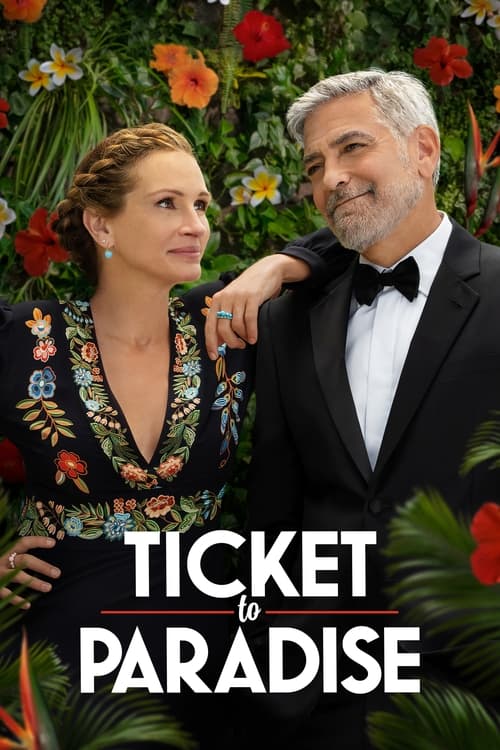
Ticket to Paradise (2022), with Kaitlyn Dever and Billie Lourd. Continuing as producer-star, Roberts’ next movie was the pandemic-set
Leave the World Behind (date to be announced), by writer-director Sam Esmail and co-starring Mahershala Ali,
Ethan Hawke, Myha’la Herrold, and Kevin Bacon.