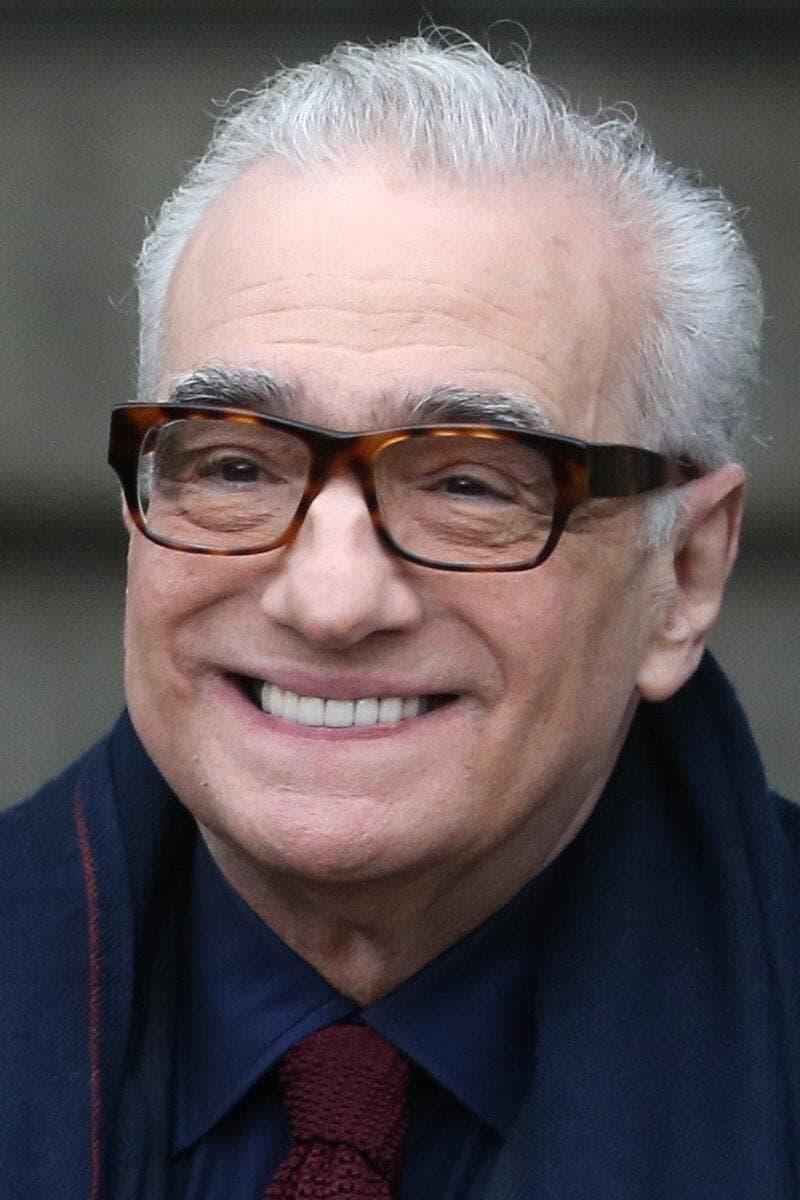
Martin Scorsese (birthname:
Martin Charles Scorsese) is one of the key American filmmakers since the 1970s, and an enormously influential voice in international cinema both as a filmmaker and passionate cinephile, using his name and knowledge to promote film history and preservation.
Many of the trends in contemporary filmmaking are inconceivable without Scorsese’s body of work, starting with his feature debut (after four short films, including a 1959 film, Vesuvius VI, which he made when he was 16 years old and the prize-winning and bloody The Big Shave (1967)),
Who’s That Knocking at My Door? (1967), starring Harvey Keitel and Zina Bethune, and premiering at the Chicago Film Festival.
Five years passed before Scorsese had his next chance behind the camera as director in the Roger Corman stable of action-exploitation movies with
Boxcar Bertha (1972), with Barbara Hershey, David Carradine, Bernie Casey, and John Carradine. Martin Scorsese established his name as a serious American filmmaker (as director-writer) with his tough crime movie,
Mean Streets (1973), with Keitel, Robert De Niro (best supporting actor winner with the National Society of Film Critics and the New York Film Critics Circle), David Proval, and Amy Robinson.
This began an exceptionally strong run of movies—most of which were almost entirely ignored by the Academy Awards (he has been nominated for best director nine times, and won just once)—continuing with the fine drama starring Ellen Burstyn,
Alice Doesn’t Work Here Anymore (1974), with Kris Kristofferson, and then the movie that arguably defined the Scorsese Style:
Taxi Driver (1976), one of the most important (and violent) American movies of the 1970s written by Paul Schrader, starring De Niro in the career-defining role of Travis Bickle, with Cybill Shepherd, Jodie Foster, Albert Brooks, Keitel, Peter Boyle, and winning Cannes’ Palme d’Or as well as four Oscar nominations (including Best Picture, Actor and Supporting Actress) and landing in twelfth place (tied with Stanley Kubrick’s 1975
Barry Lyndon) on the directors’ poll of best movies of all time by
Sight & Sound magazine.
In a radical turn, Scorsese directed his only musical and his first failure,
New York, New York (1977), co-starring Liza Minnelli and De Niro and driven by songs by John Kander and Fred Ebb. Scorsese nearly died of a drug overdose during a career crisis following New York, New York, and reunited with Schrader (and co-writer Mardik Martin) for the universally-acclaimed biopic of middleweight champ Jake LaMotta,
Raging Bull (1980), again starring De Niro (winning the Best Actor Oscar), Joe Pesci, Cathy Moriarty, and Nicholas Colasanto, and ranking number four on AFI’s greatest movies of all time. Martin Scorsese continued his intense and creative collaboration with Robert De Niro with his funny and dark
The King of Comedy (1982), co-starring Jerry Lewis and Sandra Bernhard, but ending up as a financial flop for 20
th Century Fox.
Director Scorsese had more success with one of his cult movies and another black comedy,
After Hours (1985), starring Griffin Dunne (who also produced), Rosanna Arquette, Verna Bloom, Tommy Chong, Richard “Cheech” Marin, Catherine O’Hara, and premiering at the Cannes film festival, where Scorsese won the Best Director Palme and best picture from the Independent Spirit awards. For Touchstone, Scorsese directed
The Color of Money (1986), the sequel to
The Hustler (1961), written by Richard Price (adapting Walter Tevis’ novel), and co-starring Paul Newman (reprising his original role in
The Hustler) and
Tom Cruise, with Helen Shaver and Mary Elizabeth Mastrantonio, and proving to be one of Scorsese’s more commercial movies with a global gross of $52 million.
Martin Scorsese took on one of his biggest-scale projects as director and his first-period movie with
The Last Temptation of Christ (1988), written by Paul Schrader (adapting Nikos Kazantzakis’ 1955 novel), and co-starring Willem Dafoe, Harvey Keitel, Barbara Hershey, Harry Dean Stanton, and David Bowie, with Scorsese earning a Best Director Oscar nomination. Coming off of box-office successes, Scorsese made a segment (“Life Lessons”) for
New York Stories (1989), the anthology movie alongside segments directed by Woody Allen and Francis Ford Coppola, with cast members Nick Nolte, Rosanna Arquette, Steve Buscemi, Jesse Borrego, Peter Gabriel, Ileana Douglas, and Deborah Harry.
Scorsese next directed and co-wrote (with Nicholas Pileggi, adapting his 1985 non-fiction book,
Wiseguy) what may be one of his masterpieces, his first Mob movie,
Goodfellas (1990), starring De Niro, Ray Liotta, Joe Pesci (Oscar-winning for best-supporting actor), Lorraine Bracco, and Paul Sorvino, premiering at the Venice film festival (where Scorsese won the Best Director Silver Lion) and gaining six Oscar nominations, including Best Picture. Scorsese shifted to a smaller-scaled crime genre drama, the remake of
Cape Fear (1991), starring De Niro, Nolte, Jessica Lange, Juliette Lewis, Robert Mitchum, and Gregory Peck, and became one of Scorsese’s few box-office hits with a return of $182.3 million worldwide.
Martin Scorsese shifted to a gentler vein with his adaptation of Edith Wharton’s
The Age of Innocence (1993), co-written with ex-critic Jay Cocks (Oscar-nominated for their screenplay), and starring Daniel Day-Lewis, Michelle Pfeiffer, Winona Ryder, and Miriam Margolyes, and turned in a modest profit for Columbia Pictures. Scorsese then wrote (with Nicholas Pileggi) and directed one of his greatest movies and his second Mob epic,
Casino (1995), based on Pileggi’s non-fiction book,
Casino: Love and Honor in Las Vegas, and co-starring an astonishing, eclectic cast led by Robert De Niro, Sharon Stone, Joe Pesci, James Woods, Don Rickles, Alan King, Kevin Pollak, L.Q. Jones, and Dick Smothers, and grossing a strong $116 million for Universal.
Scorsese, known for making sharply contrasting movies back-to-back, made the extremely different epic about the life of the 14
th Dalai Lama,
Kundun (1997), written by the late Melissa Mathison and featuring a cast of Tibetan actors led by Tenzin Thuthob Tsarong, but commercially buried by Disney, upon release from pressure from China, which objected to the subject matter. Martin Scorsese returned to the bad American city streets with his dark drama starring
Nicolas Cage,
Bringing Out the Dead (1999), with Paul Schrader adapting Joe Connelly’s novel, and a supporting cast including Patricia Arquette, John Goodman, Ving Rhames, and Tom Sizemore.
Scorsese reunited as a director with Day-Lewis (in one of his most swaggering performances) and co-writer Cocks (with writers Steven Zaillian and Kenneth Lonergan) for the 1840s-period New York epic based on Herbert Asbury’s book,
Gangs of New York (2002), co-starring
Leonardo DiCaprio, Cameron Diaz,
Brendan Gleeson, Jim Broadbent,
John C. Reilly, and Henry Thomas; Scorsese’s priciest movie to date ($100 million), produced with Touchstone Pictures, Miramax Films, and producer Alberto Grimaldi and released by Miramax (U.S.) and I.E.G. (ex-U.S.), returned a good $194 million globally. Scorsese continued in epic mode with his stylish Howard Hughes biopic,
The Aviator (2004), the second in the director’s long run of movies starring Leonardo DiCaprio (as Hughes), with
Cate Blanchett,
Jude Law, Kate Beckinsale, John C. Reilly, Alec Baldwin, and Alan Alda, and proving to be a commercial and critical hit, earning eleven Oscar nominations (but wins only in technical categories and yet another loss for director Scorsese) and grossing a robust $213.7 million globally.
After nearly 40 years of filmmaking, Scorsese finally saw one of his movies win the Best Picture Oscar (including for lead producer Brad Pitt) and his own Best Director Oscar with the Boston gangster drama (partially remaking Andrew Lau’s and Alan Mak’s 2002 Hong Kong cop drama,
Infernal Affairs),
The Departed (2006), starring DiCaprio,
Matt Damon, Jack Nicholson,
Mark Wahlberg, Martin Sheen, Ray Winstone, Vera Farmiga, and Alec Baldwin, and grossing a knockout $291.5 million worldwide gross.
Martin Scorsese directed one of his few novel-to-screen adaptations with Dennis Lehane’s thriller,
Shutter Island (2010), starring Leonardo DiCaprio,
Mark Ruffalo, Ben Kingsley, Michelle Williams, Emily Mortimer, Patricia Clarkson, and Max von Sydow, and proving to be another profitable Scorsese picture with a $295 million gross following a Berlin film festival premiere. Scorsese (as director and producer) made his first 3-D movie and his first about a child character,
Hugo (2011), with screenwriter John Logan adapting Brian Selznick’s
The Invention of Hugo Cabret and starring
Asa Butterfield, Ben Kingsley, Jude Law, Sacha Baron Cohen, Chloë
Grace Moretz, Ray Winstone, and Emily Mortimer, and—like so many other Scorsese pictures—received lots of Oscar nominations (11) but only a few technical category wins.
Scorsese returned to direct his favorite actor-collaborator (and also co-producer), DiCaprio, in the wild and wooly
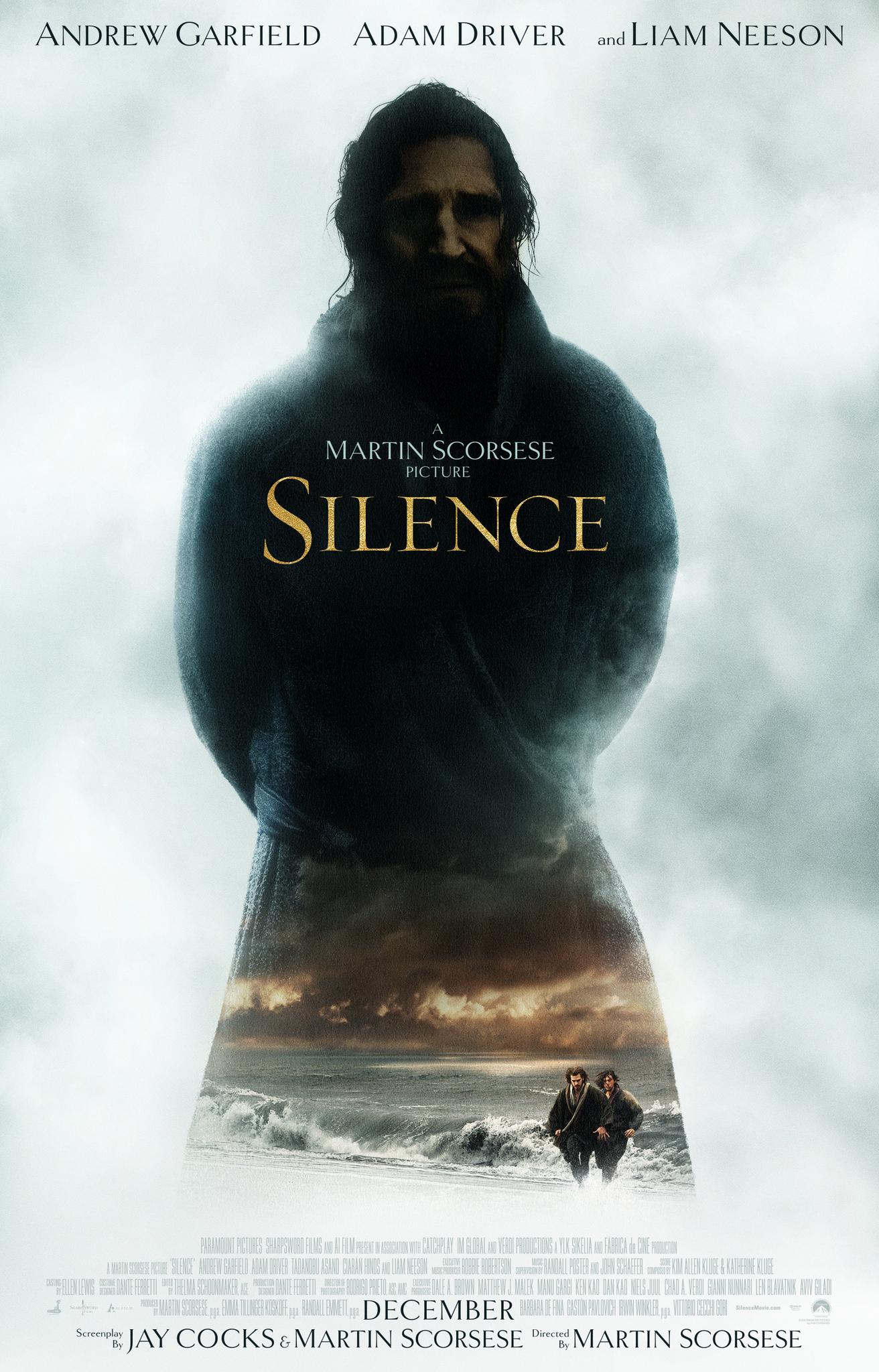
The Wolf of Wall Street (2013), based on Jordan Belfort’s memoir, and co-starring Jonah Hill, Margot Robbie, Matthew McConaughey, Kyle Chandler, Rob Reiner, Jon Favreau, and Jean Dujardin, coming away with five Oscar nominations (zero wins) and a strong $407 million gross. Martin Scorsese was director/producer/co-writer (with Jay Cocks) of his second epic about spiritual issues, the long-in-the-making international co-production,
Silence (2016), based on Shusaku Endo’s 1966 novel, and co-starring Andrew Garfield,
Adam Driver,
Liam Neeson, and Tadanobu Asano, but which lost money for distributors Paramount and StudioCanal.
Scorsese returned to the familiar turf of Mob culture with
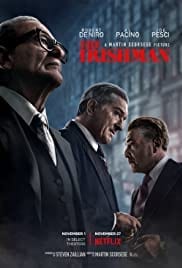
The Irishman (2019), the sprawling multi-decade epic about Jimmy Hoffa’s criminal empire (with Steven Zaillian adapting Charles Brandt’s 2004 non-fiction book,
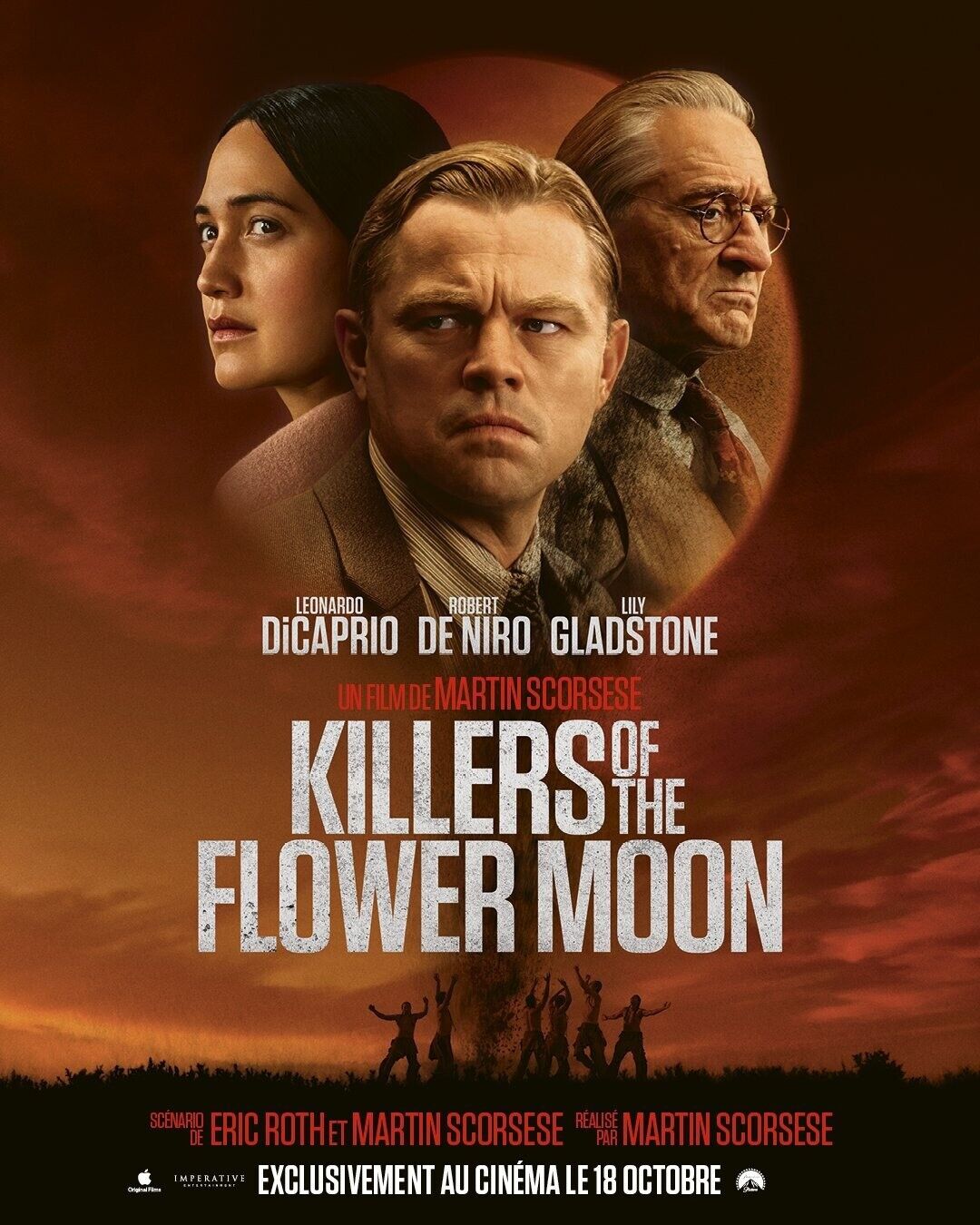
I Heard You Paint Houses) co-starring Robert De Niro, Al Pacino, Joe Pesci, Harvey Keitel, Anna Paquin, Ray Romano, and Bobby Cannavale, and released by Netflix theatrically before streaming (a first for a Scorsese picture) before being nominated for (and not winning) ten Oscar nominations. Shifting to a period Western setting for the first time and reuniting his two longtime stars—DiCaprio and Robert De Niro—Scorsese was director/producer/co-writer (with Eric Roth) adapting David Grann’s historical non-fiction book,
Killers of the Flower Moon (2023), featuring Lily Gladstone, Jesse Plemons, Tantoo Cardinal, John Lithgow, and
Brendan Fraser, and released by Apple Original Films/Paramount and made on a massive $200 million budget.
Martin Scorsese has had a distinguished filmography as a non-fiction filmmaker, starting with his intimate family portrait,
Italianamerican (1974). Scorsese has consistently built a fine library of music documentaries, including the theatrical releases,
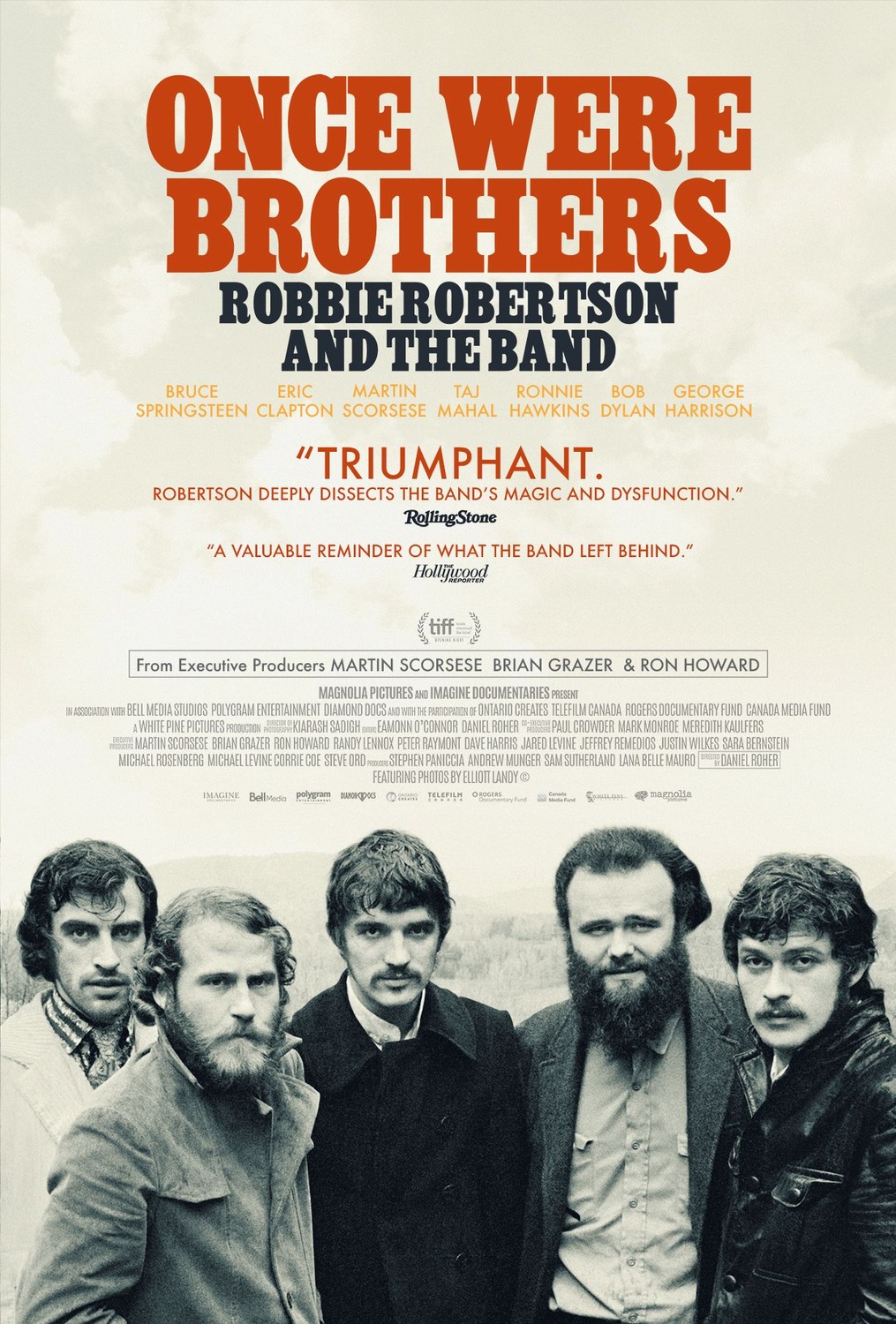
The Last Waltz (1978) about The Band, and
Shine a Light (2008), capturing The Rolling Stones at New York City’s Beacon Theatre in 2006. Scorsese’s other music features have bypassed theatrical for cable and streaming, including PBS’s
No Direction Home: Bob Dylan (2005), HBO’s
George Harrison: Living in the Material World (2011), Netflix’s
Rolling Thunder Revue: A Bob Dylan Story by Martin Scorsese (2019), and Showtime’s
Personality Crisis: One Night Only (2022), about Glam Rock figure David Johansen and co-directed with David Tedeschi. Martin Scorsese has made three feature documentaries focusing on his passion for the movies, including
A Personal Journey with Martin Scorsese Through American Movies (1995); his extraordinary survey of Italian cinema,
My Voyage to Italy (1999); and his complex portrait of director Elia Kazan, co-directed with critic/programmer/filmmaker Kent Jones,
A Letter to Elia (2010), for PBS’
American Masters series. Scorsese’s other major topics for his non-fiction films have been literary in focus, including his film about author Fran Leibowitz,
Public Speaking (2010), released by Rialto Pictures, and his co-directed (with David Tedeschi) portrait of fifty years of the August
New York Review of Books,
The 50 Year Argument (2013), for HBO.
Martin Scorsese has served as producer only on more than a handful of features across multiple decades, including
The Grifters (1990), with John Cusack, Anjelica Huston, and Annette Bening;
Mad Dog and Glory (1993), with Robert De Niro, Uma Thurman, Bill Murray, and Kathy Baker; Spike Lee’s and Richard Price’s
Clockers (1995), with Harvey Keitel, John Turturro, Delroy Lindo, Mekhi Phifer, Isaiah Washington, and Keith David;
The Hi-Lo Country (1998), with Woody Harrelson, Billy Crudup, Patricia Arquette, Penelope Cruz, Sam Elliott, and Cole Hauser; Arne Glimcher’s documentary,
Picasso & Braque Go to the Movies (2008), with cultural writers Adam Gopnik and Tom Gunning, and artist Julian Schnabel;
The Young Victoria (2009), with Emily Blunt, Rupert Friend, Paul Bettany, Miranda Richardson, Jim Broadbent, and Mark Strong; and star/director/writer Bradley Cooper’s Leonard Bernstein biopic,
Maestro (2023), with Carey Mulligan, Matt Bomer, Maya Hawke, and Sarah Silverman.