

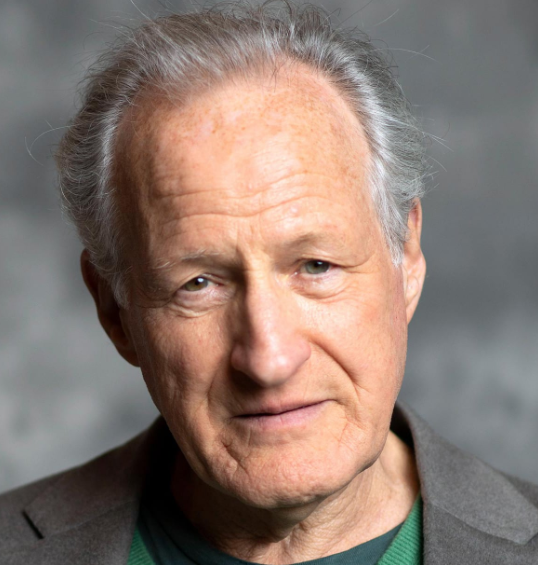
Michael Mann
Birthdate: February 5, 1943 (83 Years Old)
Birthplace: Chicago, Illinois, USA
Michael Mann (birthname: Michael Kenneth Mann) is one of the key mainstream American feature directors/writers/producers of his generation, having trudged in the television world for years before breaking into major filmmaking well into his 30s.
The small screen proved a valuable training ground for Mann (working on British TV commercials with Alan Parker, Ridley Scott, and Adrian Lyne, as well as American shows like Starsky and Hutch, Vega$, and directing and executive producing the acclaimed and innovative Police Story).
After his feature-length directorial debut on the made-for-TV The Jericho Mile (1979, though theatrically released in Europe), Mann had his U.S. theatrical filmmaking debut as writer-director with the acclaimed and stylish noir, Thief (1981), starring James Caan, Tuesday Weld, Jim Belushi, Robert Prosky, and Willie Nelson, earning United Artists a modest profit with an $11.5 million box office after the movie’s premiere at the Cannes film festival.
A neglected early Michael Mann movie is the horror-tinged The Keep (1983), with Scott Glenn, Gabriel Byrne, Jürgen Prochnow, and Ian McKellan, which was challenged by production problems and Paramount’s rejection of Mann’s 210-minute cut, and theatrically released at a drastically reduced 96 minutes for a poor $4.2 million gross.
Another Mann which he wrote and directed and which was at first received poorly and later regarded much better was the Hannibal Lecter movie, Manhunter (1986), starring William Petersen, Tom Noonan, Dennis Farina, Joan Allen, Stephen Lang, and Brian Cox and based on the Thomas Harris’ best-seller, Red Dragon.
Mann returned six years later as producer/co-writer/director with a triumph and his first-period movie, The Last of the Mohicans (1992), based on James Fenimore Cooper’s 1826 novel and starring Daniel Day-Lewis, Madeleine Stowe, and Jodhi May, proving to be Mann’s best-grossing film thus far ($143 million for 20th Century Fox/Morgan Creek/Warner Bros.) and his only movie to win an Oscar (best sound).
In arguably his finest work to date, director/writer/producer Mann adapted his novel for the epic Los Angeles crime saga, Heat (1995), starring the powerhouse cast of Al Pacino, Robert De Niro, Val Kilmer, Jon Voight, Tom Sizemore, Diane Venora, Amy Brenneman, Ashley Judd, Mykelti Williamson, Wes Studi, and Ted Levine, and turning into an profitable Mann project ($187 million global gross) that eventually earned a reputation as the gold standard in contemporary crime movies.
Michael Mann reunited with an extraordinary Al Pacino as well as Russell Crowe in top form in The Insider (1999), co-written by Mann and Eric Roth as an adaptation of the 60 Minutes report, “The Man Who Knew Too Much,” with Christopher Plummer, Diane Venora, Philip Baker Hall, Lindsay Crouse, and Debi Mazar, and earning seven Oscar nominations (including best picture) but netting only $60 million for Touchstone Pictures.
As producer/director/co-writer (again with Roth, as well as Steven J. Rivele and Christopher Wilkinson), Mann opted for his first biopic, Ali (2001), starring Will Smith, Jamie Foxx, Jon Voight, Mario Van Peebles, Ron Silver, Jeffrey Wright, and Mykelti Williamson, with Smith and Voight earning Oscar nominations but the movie earning middling reviews and losing $100 million for Columbia/Sony Pictures.
Michael Mann turned to a Stuart Beattie script as producer/director for the gripping Los Angeles thriller, Collateral (2004), starring Tom Cruise (as a cool contract killer), Jada Pinkett Smith, Mark Ruffalo, Peter Berg, Javier Bardem, and Bruce McGill, and shot by Mann on advanced high-def cameras, garnering strong reviews and grossing $221 million globally.
Mann commanded the feature version of the iconic hit TV show he co-produced, Miami Vice (2006), starring Colin Farrell, Jamie Foxx, Gong Li, Naomie Harris, Barry Shabaka Henley, and Eddie Marsan, but surprisingly not a hit for distributors Universal/United International Pictures ($164.2 million worldwide return).
Mann made his first-period crime movie, Public Enemies (2009), focusing on the FBI takedown of Johnny Depp’s John Dillinger, with Christian Bale, Marion Cotillard, Jason Clarke, and Stephen Dorff, resulting in one of Mann’s most successful projects with strong reviews and box office ($214 million). An unusual Mann movie, Blackhat (2015), dramatized computer hacking with the cast of Chris Hemsworth, Tang Wei, and Viola Davis, but was Mann’s biggest financial loser with a $19.7 million return on a $70 million budget.
It was eight years before director-producer Mann returned to feature filmmaking with his second-period biopic, Ferrari (2023), written by Troy Kennedy Martin (based on Brock Yates’ biography) and starring Adam Driver as racecar maestro Enzo Ferrari, with Penélope Cruz, Shailene Woodley, Sarah Gadon, Jack O’Connell, and Patrick Dempsey, and which premiered in competition at the Venice film festival.
Personal life
Michael Mann was born and raised in Chicago by parents Esther and Jack Mann. Mann attended and graduated from Amundsen High School, and then majored in English literature at the University of Wisconsin-Madison, where graduated in 1965 with a B.A. degree. Mann then earned his master’s degree in filmmaking at the London Film School in London in 1967. Mann’s first marriage ended in divorce in 1971. Mann then married art director Summer Mann in 1974; the couple has four children, including son Aran and daughter Ami, who is also a director and producer. Mann’s height is 5’ 8”. Mann’s estimated net worth is $90 million.
Known For
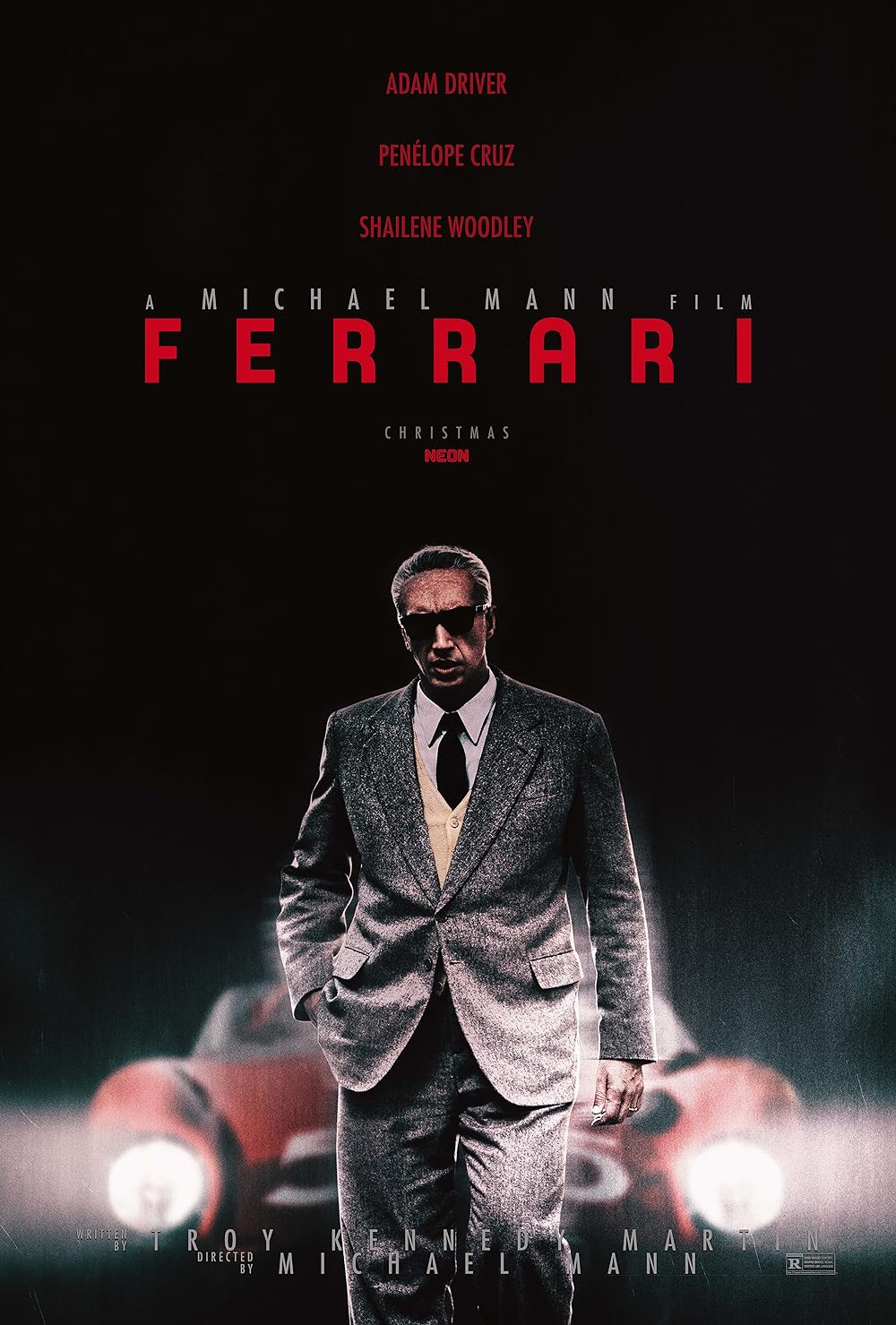
Michael Mann Movies
Director
Actor
Collapse
Previous (1)
Facts About Michael Mann
Strange Love, New Love: While Michael Mann was still an English Literature major at the University of Wisconsin in Madison, he saw Stanley Kubrick’s nuclear-age black comedy, Dr. Strangelove: Or How I Learned to Stop Worrying and Love the Bomb (1964), and it “said to my whole generation of filmmakers that you could make an individual statement of high integrity and have that film be successfully seen by a mass audience all at the same time.”
Author, Author: Mann expanded his artistic portfolio as a novelist in 2022 with his sequel book, Heat 2, which he co-wrote with thriller author Meg Gardiner.
Innovator: Michael Mann was one of the first major Hollywood filmmakers to work with new digital cameras on both Ali and Collateral.
High Praise: Despite never winning an Oscar, Mann frequently ranks high in polls of directors, with Sight & Sound magazine ranking Mann number five on a list of the best ten directors from 1977 to 2002.