Ron Howard (birthname:
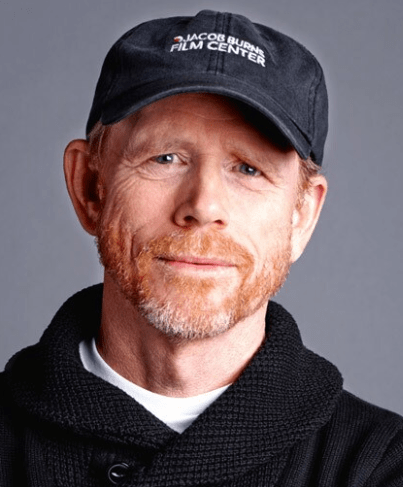
Ronald William Howard) is one of the most durable and successful Hollywood director-producers of his generation and has certainly had the most successful transition in Hollywood history from a child actor (beginning at age two) credited as “Ronny Howard” to grownup filmmaker, for which he has accrued considerable Industry sway as a partner in Imagine Entertainment, a major producer in both television and film.
Howard transitioned from acting to directing under the guidance of legendary indie producer Roger Corman, starring in the Corman-backed road action comedy,
Eat My Dust! (1976), and then Howard took on his debut directing gig on which he was also co-writer with his father Rance (while also starring!) in the Corman-backed
Grand Theft Auto (1977), turning a tidy profit for New World Pictures.
Howard took off into a mainstream studio career after his Corman “studies” with, first, as director of Warner Bros. $21-million-grossing comedy
Night Shift (1982)—crucially, Howard’s first project on which he worked with his future long-term Imagine partner producer Brian Grazer--and then as director of the big rom-com hit ($69 million),
Splash (1984), starring
Tom Hanks, Daryl Hannah, Eugene Levy, and John Candy. Howard, as director continued his remarkable box office run with 20
th Century Fox’s $85-million-grossing
Cocoon (1985), starring Don Ameche, Wilford Brimley, Hume Cronyn, Brian Dennehy, Maureen Stapleton, Jessica Tan, and Gwen Verdon.
Ron Howard solidified his position as one of Hollywood’s top money-making directors with his second collaboration with George Lucas (as story writer) and a first movie under the banner of Imagine,
Willow (1988), starring
Val Kilmer, Joanne Whalley, Warwick Davis, and Billy Barty, earning $138 million for MGM/Lucasfilm/Imagine. Howard made his second movie as director/writer (story writer) with
Parenthood (1989)—his first of twelve nearly consecutive movies with distributor Universal Pictures from 1989 to 2013—starring Steve Martin, Tom Hulce, Rick Moranis, Martha Plimpton,
Keanu Reeves, Jason Robards, Mary Steenburgen and Dianne Wiest, grossing a powerhouse $126 million.
Howard continued as a hit-making director with his firefighter drama for Universal,
Backdraft (1991), with Kurt Russell, William Baldwin, Scott Glenn, Jennifer Jason Leigh, Rebecca De Mornay, and Donald Sutherland, delivering over $152 million globally. Howard’s other thriller during this period—and one of his biggest hits--was the Mel Gibson-starring and $309.5-million-grossing
Ransom (1996), co-starring Rene Russo, Gary Sinise, Delroy Lindo and Lili Taylor, and released by Touchstone/Disney.
Ron Howard has been director/producer of two Westerns, a genre with which he’s not usually associated: the Universal Pictures/Imagine-backed epic
Far and Away (1992) (on which Howard was also a story writer, with screenwriter Bob Dolman), starring
Tom Cruise and
Nicole Kidman, with Thomas Gibson, Robert Prosky and Cyril Cusack; and as director/producer of Columbia/Sony Pictures Releasing’s
The Missing (2003), based on Thomas Eidson’s 1996 novel,
The Last Ride, and starring Tommy Lee Jones,
Cate Blanchett, Evan Rachel Wood, and Aaron Eckhart, marking one of Howard’s few box-office failures ($38 million against $60 million costs). Howard directed one of his lower-budget and intimate comedy dramas in a celebration of the newspaper business, Imagine/Universal’s
The Paper (1994), starring
Michael Keaton, Glenn Close, Marisa Tomei, Randy Quaid, and Robert Duvall.
Howard has made a pair of dramas recreating events in recent U.S. history with, first, as director of Imagine/Universal’s acclaimed space-crisis hit movie,
Apollo 13 (1995), starring Tom Hanks, Kevin Bacon, Bill Paxton, Gary Sinise,
Ed Harris, and Kathleen Quinlan, earning nine Oscar nominations and over $355 million globally; and then Howard was director/producer of the re-creation of the infamous post-Watergate 1977 Richard Nixon-David Frost TV interview,
Frost/Nixon (2008), based on Peter Morgan’s 2006 play co-starring Frank Langella (as Nixon) and Michael Sheen (as Frost), with Bacon,
Rebecca Hall, Toby Jones, Matthew Mcfadyen, Oliver Platt, and
Sam Rockwell.
Ron Howard made an unusual turn to Dr. Seuss as director/producer of Imagine/Universal’s
How the Grinch Stole Christmas (2000), starring
Jim Carrey (as The Grinch), Jeffrey Tambor, Christine Baranski, Bill Irwin, and Molly Shannon, and becoming one of the highest-earning Christmas movies with a $347 million global take.
Howard has displayed a particular interest in biopics, first as the Oscar-winning director/producer of the Best Picture-winning
A Beautiful Mind (2001), starring Oscar-winning Russell Crowe, with Ed Harris,
Jennifer Connelly, Christopher Plummer, and Paul Bettany, and grossing a terrific $317 million; as director/producer of another Oscar-nominated movie starring Crowe, the boxing drama
Cinderella Man (2005), with Renée Zellweger and Oscar-nominated Paul Giamatti; as director/producer of the race car drama about the Niki Lauda-James Hunt Formula One rivalry,
Rush (2013), co-starring
Chris Hemsworth and Daniel Brühl and grossing over $98 million after premiering at the Toronto Film Festival; and then Howard was director/producer of the poorly-received film version of J.D. Vance’s 2016 memoir,
Hillbilly Elegy (2020), co-starring Amy Adams and Glenn Close, and released theatrically in limited pattern before streaming on Netflix.
Howard as director/producer took on a trilogy of big-screen versions of novelist Dan Brown’s mega-best sellers starring Tom Hanks as Professor Robert Langdon and backed by Columbia Pictures/Sony Pictures Releasing:
The Da Vinci Code (2006), with Audrey Tatou, Ian McKellan, Alfred Molina, and Jean Reno, and premiering at the Cannes Film Festival; the better-reviewed
Angels & Demons (2009), with Ewan McGregor, Armin Mueller-Stahl, Nikolaj Lie Kass and Stellan Skarsgård; and the widely lambasted finale in the Robert Langdon series,
Inferno (2016), with Felicity Jones, Irrfan Khan,
Omar Sy, and Ben Foster, with all three grossing a cumulative gross of $1.46 billion worldwide.
Howard has as director/producer also dramatized real-life events that involved survival against terrible odds in nature, first with
In the Heart of the Sea (2015), based on Nathaniel Philbrick’s 2000 non-fiction account of the whaling ship The Essex which inspired Herman Melville in writing Moby-Dick, co-starring Chris Hemsworth,
Cillian Murphy,
Tom Holland, Ben Whishaw, and
Brendan Gleeson, but which lost money for Warner Bros; and Howard was director/producer of the true-life Thai cave rescue adventure,
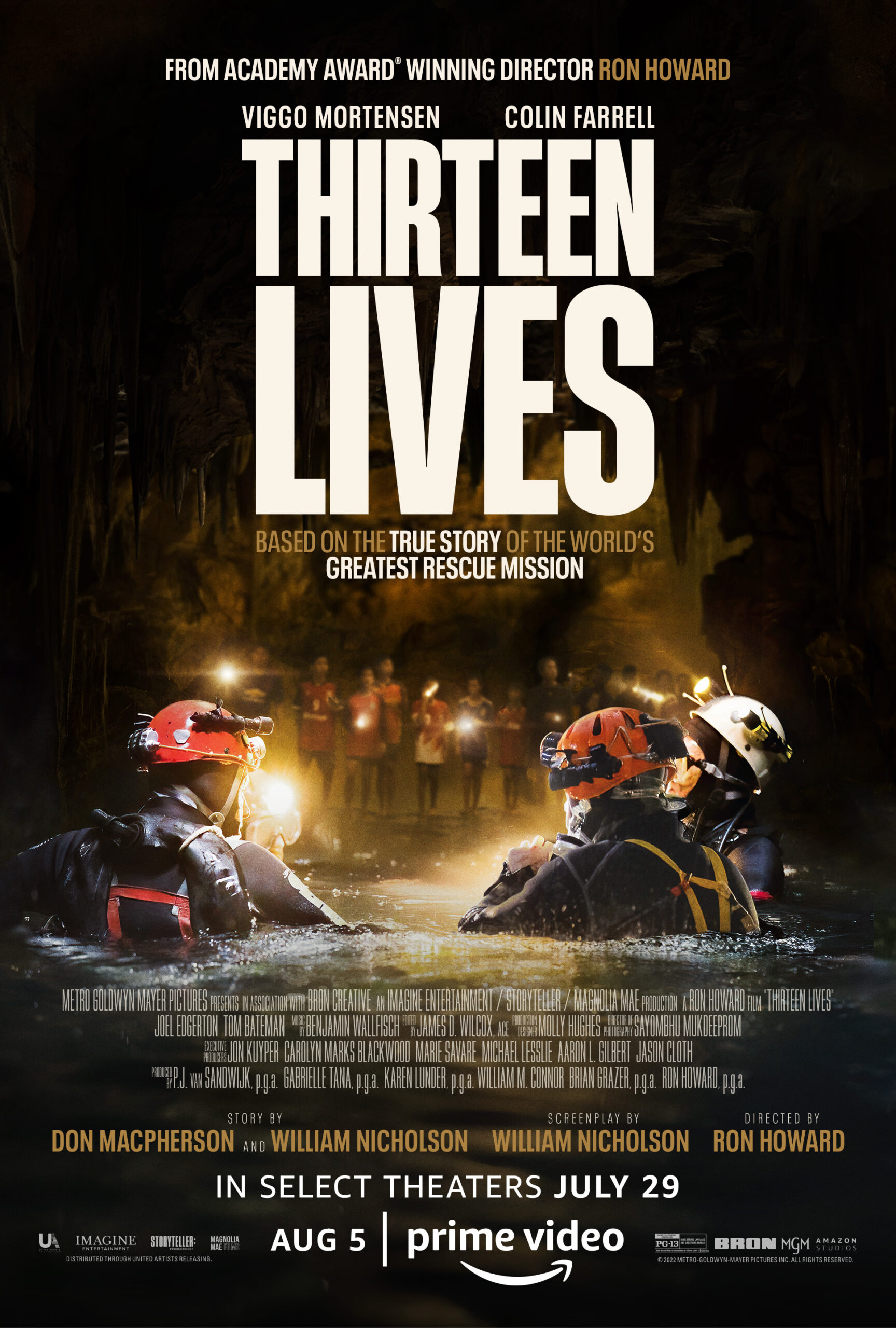
Thirteen Lives (2022), co-starring
Viggo Mortensen,
Colin Farrell, Joel Edgerton, and Sukollawat Kanarot, and though made for the big screen, had just a brief limited theatrical release before Amazon Prime streaming.
Ron Howard reunited with George Lucas for his first directorial foray into the
Star Wars universe with
Solo: A Star Wars Story (2018), the origin story of Hans Solo (played by
Alden Ehrenreich) co-starring
Woody Harrelson, Emilia Clarke, Donald Glover, Thandiwe Newton, and Paul Bettany, resulting in a loss for Disney and the first
Star War money-loser ($393 million against an estimated $300 million budget).
Howard was director/producer of the Imagine-backed early 20
th century survival thriller,
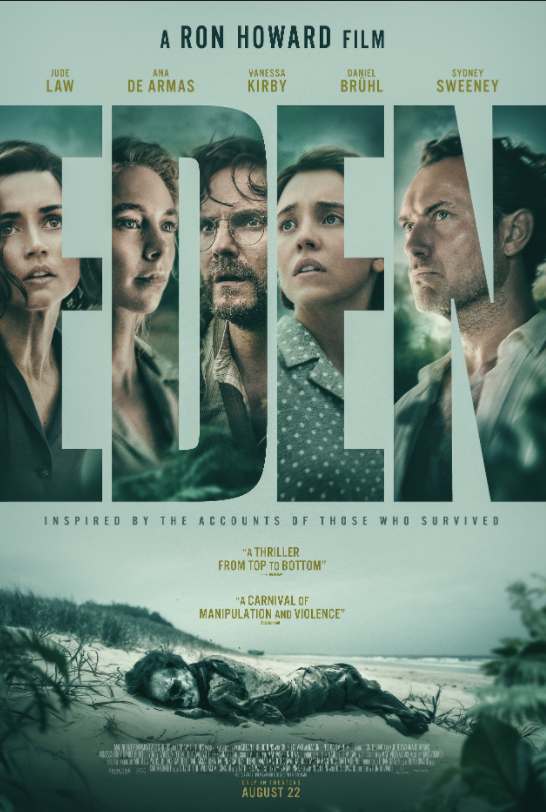
Eden (2024), co-starring
Jude Law,
Vanessa Kirby, Daniel Brühl,
Sydney Sweeney, and
Ana de Armas, premiering at the Toronto Film Festival and released via Amazon, and then Howard as director/producer took on his first animated musical
The Shrinking of Treehorn (date to be announced), based on Florence Parry Heide’s children’s book and backed by Paramount Pictures/Paramount Animation/Imagine and acquired for release by Netflix, marking Howard’s third consecutive feature released by a major streamer—the dominant trend in a movie business in which Howard has worked over six decades.
Howard has had a robust career as a producer-only (primarily via Imagine Entertainment) on an eclectic roster of movies, including
Clean and Sober (1988), starring Michael Keaton;
The Chamber (1996), co-written by William Goldman and co-starring Chris O’Donnell and Gene Hackman; the Pat O’Connor-directed
Inventing the Abbotts (1997), co-starring Liv Tyler, Joaquin Phoenix, and Billy Crudup;
The Alamo (2004), with
Dennis Quaid, Billy Bob Thornton, Jason Patric, and Jordi Molla; Universal’s animated
Curious George (2006); director/producer Clint Eastwood’s
Changeling (2008), starring Angelina Jolie and John Malkovich; Gus Van Sant’s
Restless (2011), with Henry Hopper and Mia Wasikowska;
Cowboys & Aliens (2011), starring Daniel Craig and Harrison Ford;
The Good Lie (2014), starring Reese Witherspoon; the Stephen King adaptation
The Dark Tower (2017), starring Matthew McConaughey and
Idris Elba; Lin-Manuel Miranda’s sharp musical adaptation of Jonathan Larson’s
Tick, Tick…Boom! (2021), starring Andrew Garfield; and
The Beanie Bubble (2023), with Zach Galifianakis,
Elizabeth Banks, Sarah Snook, and
Geraldine Viswanathan.
Ron Howard’s acting career was primarily on television (including his beloved role as Opie on
The Andy Griffith Show (1960-1968) and as Richie on
Happy Days (1974-1980), but he also appeared as an actor in movies, including
The Music Man (1962), with Robert Preston; Vincente Minnelli’s rom-com starring Glenn Ford,
The Courtship of Eddie’s Father (1963); Disney’s
The Wild Country (1970); a central role in the wonderful ensemble of George Lucas’ only period comedy-drama,
American Graffiti (1973);
The Spikes Gang (1974), starring Lee Marvin; and the Don Siegel-directed
The Shootist (1976), starring John Wayne in his final screen performance, and for which Howard received a best-supporting actor Golden Globe nomination.