A unique figure in Canadian cinema,
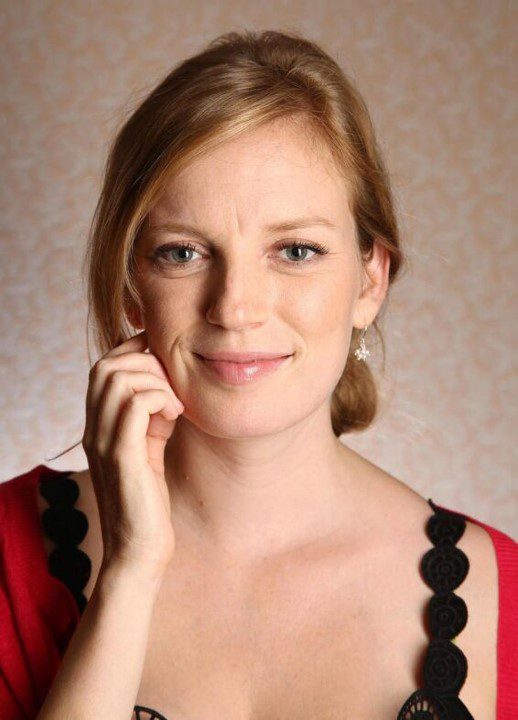
Sarah Polley (birthname: Sarah Ellen Polley) has made a striking evolution from one of the finest young Canadian actors of her generation to an acclaimed filmmaker of narrative and non-fiction features. Her acting career began when she was five years old, in the Disney movie, One Magic Christmas (1985), with
Mary Steenburgen.
After a child role in the Columbia-producer noir thriller, The Big Town (1987), with
Matt Dillon and Diane Lane, the first notable movie (and role) on Polley’s busy child acting credit roll was Terry Gilliam’s The Adventures of Baron Munchhausen (1988), with John Neville, Eric Idle, Oliver Reed, Uma Thurman, Jonathan Pryce, and Valentina Cortese, which was critically acclaimed and nominated for four Oscars but theatrically dumped by distributor Columbia.
Polley’s first movie with rising Canadian writer-director Atom Egoyan was Exotica (1994), with Bruce Greenwood, Mia Kirschner, Don McKellar, Arsinée Khanjian, and Elias Koteas, earning the FIPRESCI award at the Cannes film festival. Sarah Polley’s acting breakthrough was a teenage girl in Egoyan’s shattering adaptation of Russell Banks’ novel, The Sweet Hereafter (1997), with Ian Holm, Maury Chaykin, Greenwood, and Tom McCamus, winning Cannes’ Grand Prix, two Oscar nominations, with Polley winning multiple Best Supporting Actress wins and nominations from multiple organizations (including the Boston, Toronto, and Chicago Film Critics, and the Genie Awards).
Polley co-starred in writer-director Thom Fitzgerald’s drama, The Hanging Garden (1997), with Peter MacNeill, and co-winning the Toronto film festival’s People’s Choice Award. Another major Canadian filmmaker at the time whom Polley worked with was writer-director Don McKellar, in his black comedy, Last Night (1998), with Sandra Oh, McKellar, and
David Cronenberg. Polley’s first starring role (as well as the face on the poster) was for writer-director Audrey Wells, Guinevere (1999), with Stephen Rea, Jean Smart, and Gina Gershon, and winning Sundance Festival’s screenwriting prize.
Sarah Polley once again starred in director-cinematographer Doug Liman’s crime comedy, Go (1999), with Taye Diggs. Katie Holmes, Jay Mohr, Willam Fichtner, and Timothy Olyphant, and eventually became a cult hit after a poor commercial opening. With writer-director Cronenberg and his twisted thriller, Existenz (1999), Polley completed her circuit of working with every major Canadian narrative filmmaker, playing support in this one with Jennifer Jason Leigh,
Jude Law, Ian Holm, Don McKellar, Willem Dafoe, and winning a Silver Bear for Outstanding Artistic Contribution at the Berlin film festival.
Polley played co-star in director Kathryn Bigelow’s mystery, The Weight of Water (2000) with Sean Penn, Elizabeth Hurley, and Catherine McCormack, which tanked at the box office. Another interesting box office failure was director Michael Winterbottom’s The Claim (2000), with Polley co-starring with Wes Bentley, Milla Jovovich, Peter Mullan, and Nastassja Kinski followed by the starring role in Hal Hartley’s Icelandic “monster movie,” No Such Thing (2001), with Helen Mirren and Julie Christie, and premiering at the Cannes film festival.
Polley reunited with filmmaker Fitzgerald for The Event (2003), with Olympia Dukakis, McKellar, and Parker Posey, premiering at the Sundance film festival. Sarah Polley further reinforced herself as one of the major young stars of international auteur cinema as the star of writer-director Isabel Coixet’s Spanish-Canadian co-production, My Life Without Me (2003), with Amanda Plummer, Mark Ruffalo, Scott Speedman, Leonor Watling, Deborah Harry, and Maria de Medeiros, grossing a healthy $12.3 million global gross. The biggest-grossing movie for actor Polley was the Zack Snyder/James Gunn remake, Dawn of the Dead (2004), with Ving Rhames and Makhi Phifer, earning over $102 million globally.
Sarah Polley joined German writer-director Wim Wenders for his U.S.-based contemporary Western, Don’t Come Knocking (2005), with Sam Shepard, Jessica Lange, Tim Roth, Fairuza Balk, and Eva Marie Saint, premiering at the Cannes film festival. Polley’s second collaboration with Isabel Coixet was The Secret Life of Words (2005), co-starring Tim Robbins, Javier Camara, and Julie Christie, with Polley, was nominated for Best European Actress from the European Film Awards after a world premiere at the Venice Film festival.
Polley made a return to Iceland for director-producer Sturla Gunnarson’s fantasy-adventure, Beowulf & Grendel (2005), starring Gerard Butler, Stellan Skarsgård, Ingvar Sigurðsson, Eddie Marsan, and Tony Curran, followed by a co-starring role in writer-director Jaco Van Dormael’s sci-fi drama, Mr. Nobody (2009), starring
Jared Leto, Diane Kruger, and Rhys Ifans, and finally released limited in the U.S. in late 2011.
Polley co-starred with Adrien Brody in another sci-fi movie, Splice (2009), written and directed by Vincenzo Natali, earning $27 million globally (under its $30 million budget). Polley’s final movie as an actor was in a supporting role in director Bruce McDonald’s Canadian comedy-drama, Trigger (2010), with Molly Parker, the late Tracy Wright, and Don McKellar, and premiering at the Toronto film festival.
Sarah Polley launched her filmmaking career in tandem with her acting career, first by making four short films from 1999 to 2002, before making her narrative feature debut as writer-director with Away from Her (2006), based on Alice Munro’s short story, “The Bear Came Over the Mountain,” and starring Julie Christie, Gordon Pinsent, and Olympia Dukakis, earning Polley an Oscar nomination for Best Adapted Screenplay and Christie for Best Actress, and grossing a solid $9 million global take.
Polley’s second film as writer-producer-director, Take This Waltz (2011), starring
Michelle Williams, Seth Rogen, and Sarah Silverman, also earned strong reviews and solid box office, with $5 million globally. Sarah Polley’s possibly most impressive work as a filmmaker to date was her brilliant autobiographical non-fiction feature, Stories We Tell (2012), relating aspects and dimensions of some of the complicated relationships in her life, and winning a remarkable string of best documentary prizes from the Los Angeles and New York film critics organizations as well as the National Board of Review and a Writers Guild (U.S.) documentary screenplay prize.
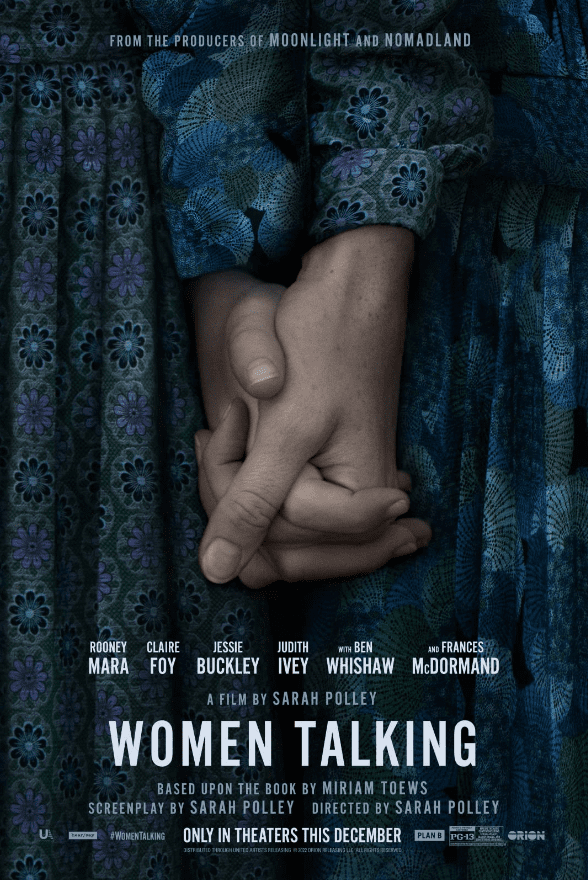
After a decade of directing and writing for limited series television, Polley returned to the big screen in 2022 with her highly acclaimed drama based on Miriam Toews’ novel,
Women Talking, starring Rooney Mara, Claire Foy,
Jessie Buckley, Judith Ivey, Frances McDormand, and Ben Whishaw, and premiering at the Telluride film festival.